
California’s highways are planned and maintained by the California Department of Transportation and a network of state and federal agencies; its harbors have nothing comparable. With no shared standards for how to prepare for climate change, each harbor decides for itself how much to invest, and many are not ready for rising seas or the larger tsunamis that could come with them. Dr. Jason Patton from the California Geological Survey made that case at the Resilient California Summit, where he presented research on how sea-level rise will affect tsunami hazards along the coast.
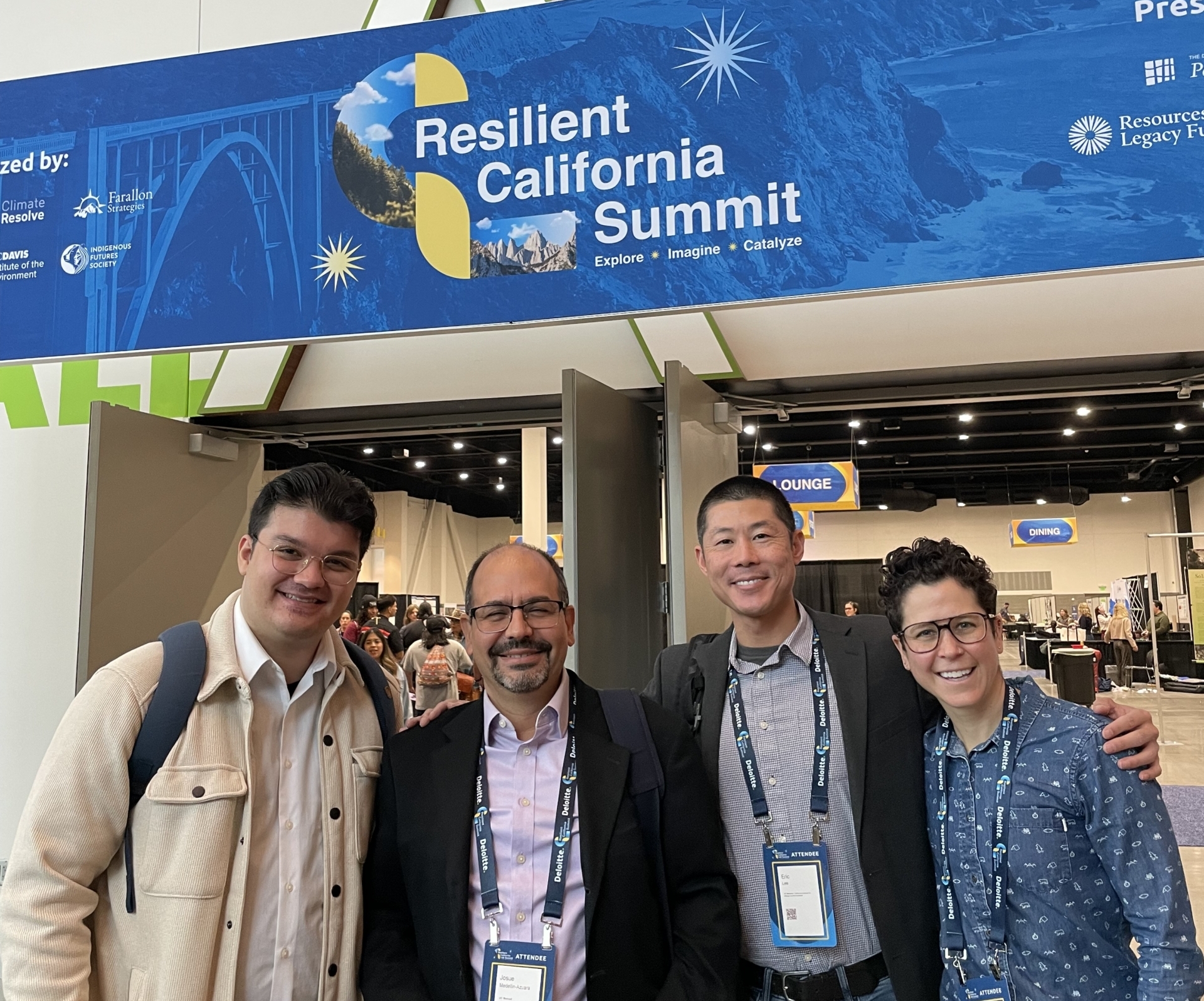
The summit, held October 20 to 22 at the SAFE Credit Union Convention Center in Sacramento, drew about 1,400 people for the official release of California’s Fifth Climate Change Assessment. The CIEE team worked on the Assessment with the Governor’s Office of Land Use and Climate Innovation (LCI), subcontracting the research teams behind its 32 reports and running the anonymous expert review that shaped the final versions. Many of the posters on display came out of that process.
Attendance reached well beyond researchers. State and local officials came, including the California Natural Resources Agency’s Secretary Wade Crowfoot, along with community organizations from across the state, city leaders, utilities and other businesses, and tribal leaders. Each day opened with a presentation from California Native American tribal leaders and a panel of resilience leaders, then split into breakout sessions for the afternoon before a closing panel.
Climate Impacts Across the State
A case study on the Central Coast showed how differently climate change can affect communities within a single region. The area is made up of small, scattered cities, with wealthy communities on the coast and struggling ones inland, and is home to about 20 Native American tribes. It faces more extreme heat, more intense droughts, coastal flooding, and larger wildfires.
Water is the biggest concern. Most of the region relies on groundwater, and hotter, drier conditions pull more moisture out of the soil. Panelists discussed stormwater capture, groundwater recharge, recycled water, and pumping fees to limit how much people draw from the ground. Farmworkers are especially worried about drought, and while farming communities are looking at ways to grow with less water, many can’t afford to adapt the way they’d like.
Offshore, ocean heat waves have killed off kelp forests, setting off a chain of effects through the marine ecosystem. Researchers are seeing better recovery inside marine protected areas, likely because those areas protect the predators that eat sea urchins, which otherwise graze the kelp down.
Other sessions turned to the human side of these changes. Researchers from CIRCLE at Stanford Psychiatry study the psychological toll of climate change, which rarely makes it into planning documents. People who lose a home to wildfire or live through a flood often carry trauma long afterward, and many children are frightened by the idea that the world will change dramatically within their lifetimes.
Tools and Lessons for Local Governments
Several sessions pointed to Cal-Adapt, a public collection of tools and datasets showing current and projected climate impacts across California. It’s useful for city planners, utilities planning new infrastructure, and researchers who need a common set of projections to work from.
Sessions on local programs offered practical lessons. Regeneración runs events that let residents get familiar with electric vehicles, since many people are still anxious about them, along with a program that walks people through buying an EV and claiming rebates. About 2,600 people have gone through it. The team said surveying residents first, and being careful about the language they used, made a big difference.
Funding and follow-through came up repeatedly. Santa Cruz has had more success winning grants since hiring a project management firm to handle grant writing and administration. On the infrastructure side, vendors going out of business remains a real obstacle to building out EV charging.
Read more about Fifth Assessment reports on the California Climate Change Assessment website